Sunday, January 30, 2011

Snow, Juncos and Tree Sparrows, Oh My!/ Nieve, juncos y gorriones, ay Dios!


Spizella arborea
As of Friday, Jan 29th 2011

I will sum everything up, all right? Great!

Wednesday 27th:

See my last post "Today At The Feeder" for hawk and cardinal stories

Begins heavily snowing at about 4 PM, keeps on snowing all night long. Chickadee leaning on tree branch looked surprised at the snow falling, other chickadees seemed to look surprised and scared too, very adorable behavior!
BIG traffic problems in MD and VA. My dad left work early at about 3 PM and got home at 1:30 AM.
Stops snowing at about 11 PM. LOTS of snow!


Thursday 28th:

School closed.
I wake up at the sound of my alarm, and the angered chirps of a titmouse that seemed to be annoyed at the light morning snow that was falling.
Dark-eyed juncos learn to eat from suet feeder!

Friday 29th:

School closed, snows in the morning or afternoon, I don't remember.

New feeder visitor and life bird comes! An American Tree sparrow visits feeder! This sparrow made an epic journey from its breeding grounds in the Arctic to this Maryland balcony. How were the polar bears, Mr. Spizella arborea?

__________________________________________________________________
ES

Traducción vendrá pronto. 

===========
-Cristina
-----------------

Photo/Imagen: American Tree Sparrow from / Chimbito o Gorrión arboreo de Wiki Commons.


Saturday, January 29, 2011

Today at the feeder/Hoy en el comedero

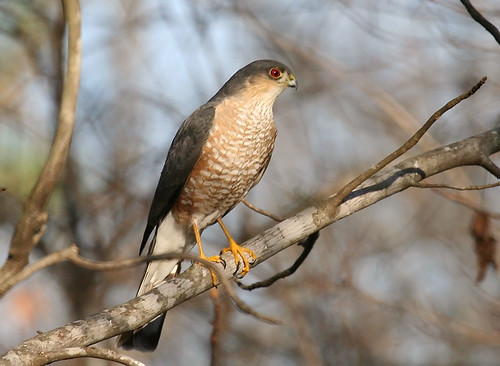
Accipiter striatus

As of  Wednesday, January 26 2011
A blanket of snow covered this area of Maryland today, and most of the county's schools where closed (including mine, yay!). Our father woke us up at about 8:40 am, talking about a hawk eating something outside. Now that is the best way to wake me up. I looked out the window and the first thing I noticed wasn't the white blanket, but a Sharp-shinned hawk tearing something apart in the snow-covered ground. It was certainly enjoying its meal, for it was very cold and this unfortunate little prey (I afterwards noticed it was a bird, a junco perhaps) must've been a truly tasty breakfast. Afterwards the hawk flew off with its meal to seek another more comfortable plucking spot. It's the first time I see an adult sharpie, by the way. I have only seen juveniles, usually in failed attempts to catch a junco or sparrow at the feeder.
Afterwards, the only thing left was a few plucked feathers and--grisly as it sounds--blood from the kill. I love hawks, anyway, hunters or not.

Now, second interesting story of the day. A male cardinal, perhaps tortured at the sight of all the birds eating from our only feeder (we had another one, but when hanging it in the tree it fell and broke), he decided to try and see if he could eat from suet from the suet cage.
He had some difficulty, being mostly ground feeders cardinals are not adapted to hanging on tree branches or in this case a hanging suet feeder. They are not chickadees.
But this male was determined to do it. He fluttered around it, trying to bite off suet on mid-air, but it didn't work. He fluttered a whole lot more, but after noticing this just didn't work he decided to cling on to the top and bite off some suet, balancing himself with ocassional flutters.
What a cardinal!

Photos of sharpie tearing apart bird coming soon (rated PG--no blood visible)
_________________________________________________________________
ES

Miércoles 26 de enero del 2011:

Una cobija de nieve había cubierto esta área de Maryland hoy, y la mayoría de las escuelas del condado estaban cerradas (¡incluida la mía!). Nuestro papá nos despertó a como a las 8:40 am hablando sobre un halcón que se estaba comiendo algo afuera ¡Esa es la mejor forma de despertarme! Miré por la ventana y lo primero que noté no fue la cobija blanca, sino un Gavilán Pajarero descuartizando algo en el suelo cubierto de nieve. Claramente estaba disfrutando su desayuno, ya que estaba muy frío afuera y esta desafortunada presa (después noté que era un pájaro, quizás un junco) debió de ser un delicioso manjar.
Después el gavilán voló con su desayuno a algún otro sitio donde pudiera desplumarla con más facilidad. Por cierto que este es el primer gavilán pajarero adulto que veo, pues normalmente veo solo jóvenes tratando de cazar a los juncos y gorriones que llegan al comedero.
Lo único que quedó de su presa fueron algunas plumas y--por más horrible que suene--manchas sangrientas en la nieve. Amo a los gavilanes de todos modos, cazadores o no.

Ahora, segunda historia interesante del día. Un Cardenal macho, probablemente torturado al ver a todos los demás pájaros comiendo de nuestro único comedero (teníamos otro, pero cuándo estaba siendo colgado en el árbol cayó y se rompió). Por lo tanto el decidió intentar y ver si podía comer sebo de la jaula de sebo.
Le costó bastante, ya que al ser un pájaro que busca comida en el suelo el cardenal no estaba adaptado para agarrarse de un comedero que colgaba de una rama. Ellos no son carboneros.
Pero este cardenal estaba determinado a lograrlo. Revoloteó alrededor del comedero, viendo a ver si podía agarrar un pedazo del sebo en el aire. Revoloteó mucho más, pero finalmente se rindió y encontró una nueva forma. Se agarró de la rama en la que colgaba el comedero y bajó hacia la parte superior del comedero, y de ahí si pudo comer del sebo, con ocasionales revoloteos ¡Yum!
Qué cardenal!

Fotos del gavilán desgarrando a su presa vendrán pronto. (calificadas como PG--no hay sangre visible).

==========
-Cristina
---------------

Photo/Imagen: Sharp Shinned hawk from/Gavilán Pajarero (c) BigKyle28 de/from Flickr.


Tuesday, January 25, 2011

Saw-Whet owl heard!/¡Mochuelo Cabezón oído!

Aegolius acadicus
                                                   -----------------------
Yesterday, in the middle of the night I heard something coming from outside. It was a series of whistles or cries, I'm not sure how to explain it well, but I certainly knew it had to be an owl of some kind. I kept hearing, and quickly ran to my parents bedroom to tell them. I ran to the kitchen (it  has a big window) and opened it, but for the moment I had it open I the sound had stopped. How foolish of me, to think an owl wouldn't see or hear me! 
I looked it up on my field guide (National Geographic, 5th version) and the only owl that truly fit in was the Saw Whet owl. The habitat and most importantly the sound both fit in. 
Today, after coming from school I looked up the sound on the Cornell Lab's of of Ornithology website. What I heard in the recording was practically identical to the mysterious sound I had heard the night before. You too can here it here
But perhaps the most important thing this "sighting" made me think about was of how many wilderness areas and its wildlife remain ignored by most of the public. This apartment building joint where I live is right next to Paint Branch Stream Valley park. That creek I've been talking about is Paint Branch Stream. I have recorded 33 species of birds in late fall and winter right from my balcony. I have seen white-tailed deer, chipmunks, gray squirrels and a red fox around here, and yet everybody seems to ignore and despise this areas. Why despise? Litter. What (truly forgive me for the words) IDIOT would have the AMAZING idea of throwing trash near a stream and a park?
 All these people are nothing but ignorant SCUMS that are are so LAZY they can't even walk to the garbage container, and decide to throw it away into the woods without a second thought, and then leaving without the slightest regret of doing so. I pity them, for their ignorant ways shall remain silent and forever unimportant until somebody gives them a good lesson on nature education. 
Therefore, I decided to write a letter to the apartment manager, telling him that we shouldn't forget what is surrounding us and that it would be a good idea if he took a walk around the forgotten back area of the neighborhood--the woods--and have a good look at the trash that is there. Perhaps we could organize a clean up or something of the type, and buy or make several signs and put them in the woods. Fines would be great, but who should be managing that is the Parks manager, so I'm contacting him too. 

Lastly, thank you Saw-Whet owl for singing that night and opening my eyes to an even wider perspective.
____________________________________________________________
ES

Traducción vendrá pronto

==============
-Cristina
---------------------

Photo/Imagen: Northern Saw-whet owl from/Mochuelo cabezón de Wiki Commons.


Monday, January 24, 2011

Ferruginous Pygmy-Owl (CR EXP)! / ¡Mochuelo Caburé! (EXP en CR)


Here you can see the shady mango forest, the brushpile and the low area
next to it. Click on the image to enlargen. / Aquí se puede ver el bosque de
mangos sombreado, la gran pila de ramas y a la par de esta el "bajo". Haga click
a la imagen para engrandar.                                                                                              
                                          -------------------------------

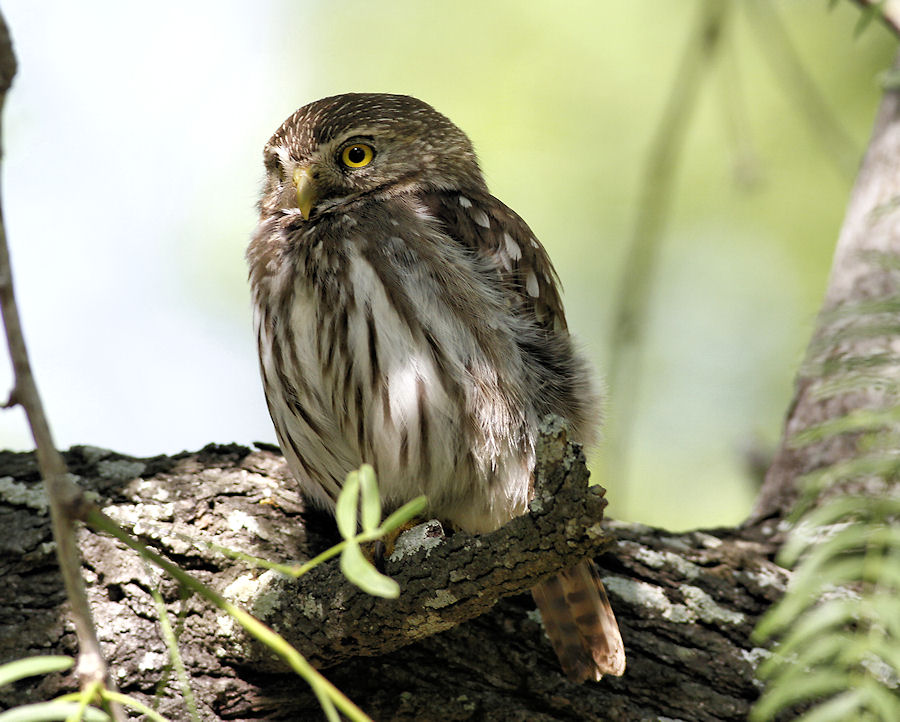
Now, I was owing you the story of when I saw a Ferruginous Pygmy Owl (Glaucidium brasilianum)  in my trip back to visit my family in Costa Rica, so here it goes:

I was taking pictures of my cousins and little brother enjoying their time in our pool (one of those that you assemble yourself), at my grandmother's property. I myself was too cold and came out to sunbathe a little, and decided to practice some of my newly learned photography skills. I glanced at the mango tree "forest" that turns out being a nice shady place, filled with warblers and vireos at this time of the year.There is also like this low area next to the mango tree forest, and when it rains it sometimes completely fills up with water.
I was looking down at a brushpile there, where I believe there are a couple of Rufous-Naped wrens nesting, and suddenly something caught my eye. A tiny brown bird had launched on something, spreading its wings over. I first thought it must be some kind of songbird, but changed my mind when it noticed me and quickly flew to a nearby tree branch. There, was an owl of some kind. It was small, could easily fit in an adult's hand. I was incredibly excited, but actually felt more amazed and nervous in a good way. I raised my camera and took a picture of it, but was disappointed at seeing it had ended up very dark, for I had it on MANUAL and it was adjusted for sunny conditions, not a shady place.
I looked closely at it for as much as I could, but when I stepped closer it flew to the mango forest. I tried to go and search for it, but my uncle called out "Cristina! Come back! There are snakes there!" Yes, certainly there are snakes there. They had found a python there once (fortunately instead of killing it they called the firefighters so that they would take it somewhere else). Thus, I found no other option but to obey, and went back to the house, yet still very excited.
I had then been wondering if what I had seen was a Central American Pygmy-Owl (Glaucidium griseiceps) or a Ferruginous Pygmy-Owl. I then searched for photos in the internet, and for a moment thought it was a Central American pygmy-owl. But then I changed my mind, for range and habitat pointed at the Ferruginous.
I couple of days later, while looking and retouching some pictures in Photoshop just for fun, an idea came to me. What if I could lighten up the picture of the owl and see if I can see something in it? I didn't hesitate to do it, and was amazed by the results:

Click for a larger version
(here I lightened up the image, and in the lower right corner there is an outlined version of it in case you have trouble seeing it) This confirmed what I had seen! The FPO's stripes are slenderer than those of the CAPO's stripes, and that was that.
Pygmy-owls are actually diurnal (active at day), although mostly crepuscular. (active at dawn and dusk). The CAPO lives on the Carribbean slope in the tropical rain forests there, while the FPO is a common sight in the Central valley (Costa Rica).
I believe what I saw was a juvenile, because it had a grayish head. Also, I believe I saw it hunting!
This is the first owl I ever see in detail, ever! 

Ferruginous Pygmy-Owl (c) 2010 Dan Lockshaw, Owling.com 
_______________________________________________________________

Les estaba debiendo la historia de cuando ví un Mochuelo Caburé ( también conocido como Mochuelo Común Glaucidium brasilianum) en nuestro viaje devuelta a Costa Rica para visitar a nuestra familia y amigos, asi que aquí va:

Estaba tomándole fotografías a mis primos (as) disfrutando la piscina de ensamblar que tenemos en la finca de mi abuela. A mí ya me había dado frío y salí para asolearme un rato, así que decidí practicar mis recién aprendidas habilidades para fotografiar un poco.
Le dí un vistazo al "bosque" de árboles de mango, que es después de todo un buen lugar sombreado, que en esta época del año se llena con reinitas y vireos por doquier. Hay un "bajo" (como nosotros lo llamamos) a la par del bosque, y a la par de este una gran pila de ramas y palos, en la cual creo deben de haber soterreyes nuquirrufos anidando, y de repente algo me  llamó la atención. Un pequeño pájaro café se abalanzó en algo, y desplegó sus insignificantes alas en el. Primero pensé que era algún tipo de ave canora pequeña, pero cambié de opinión cuando este me notó y voló hacia la rama de un árbol cercano. Ahí, había un búho de algún tipo. Era diminuto, podía fácilmente caber en la mano de una persona adulta. Estaba muy emocionada, pero al mismo tiempo algo nerviosa en una buena manera. Le tomé una fotografía con mi cámara, pero me sentí desilusionada al notar que la tenía en MANUAL y estaba ajustada para condiciones soleadas, no una rama cerca de un bosque muy sombreado.
Lo observé lo mas que pude, pero cuando tomé un paso para adelante el búho voló rápidamente al bosque de mangos. Estaba determinada a ir y encontrarlo, pero mi tío me llamó "¡Cristina! ¡Venga para acá qué ahí hay culebras!" Ciertamente hay serpientes ahí. Hace un tiempo encontraron una pitón cerca de ese lugar (afortunadamente en vez de matarla llamaron a los bomberos, quienes se la llevaron a un lugar lejos de ahí). No tuve opción excepto obedecer, y me devolví a la casa, muy emocionada de todos modos.
Después estuve preguntándome si lo que vi fue o un Mochuelo Centroamericano (Glaucidium griseiceps) o un Mochuelo Caburé. Por un momento pensé que era un MCA (mochuelo centroamericano), pero después de revisar el hábitat y rango de distribución me incliné al Caburé.
Un par de días después, mientras revisaba y retocaba algunas fotos en Photoshop, me llegó ls idea de que tal vez si aclaraba la imagen quizá podría alcanzar a ver algo, y así fue:

Click para engrandar
(aquí aclaré la imagen, y en la esquina inferior derecha delineé el contorno del búho por si tienen problemas viéndolo) ¡Esto confirmó lo que había visto! ¿Ven las rayitas en el vientre del búho? Las del MCA son más gruesas, entonces este sí es un Caburé, y así fue.

El mochuelo caburé, o realmente este tipo de búhos pequeños en general son típicamente diurnos (activos de día), pero son más crepusculares (activos al amanecer y al atardecer). El MCA habita los bosque húmedos de la vertiente del Caribe, mientras que el Caburé se es común en el Valle Central (Costa Rica).

Creo que ví uno joven, ya que su cabeza era algo grisácea ¡Es más, creo qué lo ví cazando!

Mochuelo Caburé (c) 2010 Dan Lockshaw, Owling.com.
============
-Cristina
------------------

Imágenes/ Photos:  First and second image are taken by me, source specified in third one/ Primera y segunda imagen son tomadas por mí, la fuente de la tercera ya es especificada.

Saturday, January 22, 2011

Local Woods Patch work!/ ¡Trabajando con un parche de bosque local!

I have read before about birders doing something called "patch work", where they would visit a local patch of woods, park or any local place that offered good habitat for birds to do a regular, almost weekly "survey" of the areas birds. Many birders have their "own" local patch, which they visit regularly to build up a picture of the place's wildlife, mainly birdlife in this case. You get familiarized with the birds, and get to know special birds because you saw them grow in your local patch. It is amazing the amount of birds many birders find in this sometimes forgotten little patches.
Patch work is an excellent way of preserving these sometimes forgotten habitats, whose wildlife go unseen until some birder comes and begins doing some regular patch-work. Many of these habitats would perhaps be gone by now if it wasn't because of some or several birder's patch work and understanding of the patch's wildlife . Some of these patches have even ended up turning into nature reserves! Plus, it widens your birding skills and understanding, and you will always have something new to see in the meantime.
Therefore, I decided to do some of my very own patch work. And the patch I chose is perfect, and literally right in front of where I live. A large, mature mixed woodland. I know it is mature because of the presence of certain birds whose main habitat are mature woodland, such as the Hairy Woodpecker, that is a regular visitor to our suet feeder.
These woods are mainly composed of tall, old oak trees. Some of these trees, like "Old Pete", a huge white oak in this patch of mine (I named him like that), are so wide that if I hug them it is impossible to touch my fingers with each other (note that I have long arms!).
In this patch there is also a little, very clean-looking creek, which I believe must be a hit among birds and deer. I love walking near that creek, hearing the soft lulling sound of its running waters.
Now, I must begin by cleaning as much as I can this patch. Foolish people have thrown bottles, plastic bags, garbage containers and other litter. I feel terrible when I look at a Carolina wren scratching through the piles of dead autumn leaves--and a plastic bottle. Even though, the amount of litter isn't that big, and a good day of picking up litter and perhaps a large sign will keep dumb people away for some time.

Now, here is a list of the bird species I have seen here or in its surroundings, in taxonomical order:

Accipitridae: Hawks, kites eagles...

-Turkey Vulture
-Black Vulture
-Sharp-shinned hawk
-Cooper's hawk
-Red-tailed hawk

Columbidae: Pigeons, Doves...

-Rock dove
-Mourning dove

Caprimulgidae: Nighthawks, nightjars...

-Common nighthawk

Picidae: Woodpeckers

-Red-Bellied woodpecker
-Northern Flicker
-Yellow-Bellied woodpecker
-Downy woodpecker
-Hairy woodpecker
-Pileated woodpecker

Tyrannidae: Tyrant flycatchers

-Eastern phoebe

Corvidae: Crows, Jays

-Blue jay
-American crow

Paridae: Chickadees, Titmice

-Tufted titmouse
-Carolina chickadee

Sittidae: Nuthatches

-White-Breasted nuthatch

Troglodytidae: Wrens

-Carolina wren

Turdidae: Thrushes

-American robin

Mimidae: Mockingbirds, Thrashers

-Northern mockingbird
-Gray catbird

Sturnidae: Starlings

-European starling

Bombycillidae:Waxwings

-Cedar waxwing

Emberizidae: Emberizids (native sparrows, towhees, juncos...)

-Song sparrow
-White-Throated sparrow
-Dark-eyed junco

Cardinalidae: Cardinals, Grosbeaks...

-Northern cardinal

Icteridae: Blackbirds, Grackles

-Common Grackle

Fringillidae: Finches, allies

-American goldfinch

Passeridae: Non-native sparrows

-House sparrow


33 species! I can't believe I saw that many birds from my balcony! Awesome!
I'll begin patch-working in these days. I hope to see much more when spring comes!
_________________________________________________________________

ES

Había leído antes sobre muchos "pajareros" (observadores de aves) haciendo algo llamado "trabajo de parches", en lo cual visitarían periodicamente un parche de bosque, parque o cualquier lugar que ofreciera un buen hábitat para las aves y en el cual harían un "censo" de las aves en el área. Muchos pajareros tienen su "propio" parche local, al que visitan regularmente para construir una imagen general sobre la vida silvestre del parche, o en este caso, primordialmente de sus aves. Uno se familiariza con las aves del lugar, y se llega a conocer a ciertas aves en especial por que se las ha visto crecer y sobrevivir en este lugar. Es sorprendente el número de aves que muchos pajareros encuentran en estos algunas veces olvidados pequeños parches.
Trabajar con estos parches es una excelente manera de preservar estos a menudo olvidados hábitats, cuya vida muchas veces pasa desapercibida hasta que algún pajarero llegue y comience a "trabajar" regularmente con el parche. Muchos de estos hábitats quizá pudieron haber desaparecido si no fuera por el trabajo de parche y la comprensión de su vida salvaje por alguno o varios pajareros. Es más, ¡algunos de estos parches han terminado convirtiéndose en reservas protegidas! Además, agrandan los conocimientos y habilidades para observar aves de uno, además de que uno siempre tendrá algo nuevo que ver.
 Por lo tanto decidí hacer mi propio trabajo de parche ¡Y el parche que elegí es perfecto! Está literalmente justo al frente de donde vivo. Es un gran bosque mixto maduro. Se que es maduro por la presencia de ciertas aves cuyo hábitat son mayoritariamente los bosque maduros, como el Carpintero Velloso, un visitante regular a nuestros comederos para aves.
Este bosquecito está compuesto en mayoría por altos y viejos robles. Algunos de estos, como " El Viejo Pedro" (sí, yo lo llamé así), son tan grandes que puedo abrazarlo sin poder tocarme los dedos al otro lado (tomen nota de que yo tengo brazos largos!)
En el bosque también hay un pequeño y al parecer cristalino arroyo, el cual creo que es muy popular entre los pájaros y los venados.Me encanta caminar por ese riachuelo, y escuchar el suave arrullo de sus aguas fluyentes.
 Debería de comenzar por limpiar el área lo mas que pueda. Gente tonta ha tirado bolsas plásticas, botellas, contenedores de basura y otras cosas por el suelo. Me siento terrible al ver a un Soterrey de Carolina escarbando entre las hojas muertas del otoño--y una botella plástica. Sin embargo, el monto de basura no es tan grande, y un buen día de limpieza mas un gran letrero tal vez mantengan a la gente tonta fuera por un tiempo.

Esta es una lista de todas las especies de aves que he podido identificar aquí, en orden taxonómico:


Accipitridae: Gavilanes, milanos, águilas, halcones...

-Zopilote Cabecirrojo 
-Zopilote Negro
-Gavilán Americano
-Gavilán de Cooper
-Gavilán Colirrojo

Columbidae: Palomas

-Paloma Casera
-Paloma Huilota

Caprimulgidae: Chotacabras

-Añapero Yanqui

Picidae: Pájaros Carpinteros

-Carpintero Ventrirrojo
-Carpintero Escapulario
-Chupasavia Norteño
-Carpintero Velloso menor
-Carpintero Velloso
-Picamaderos Norteamericano

Tyrannidae: Mosqueros tiranos

-Mosquero Fibí

Corvidae: Cuervos, Urracas

-Chara Azul
-Cuervo (o corneja) Americano

Paridae: Carboneros, Herrerillos

-Herrerillo Bicolor
-Carbonero de Carolina

Sittidae: Trepadores

-Trepador Pechiblanco

Troglodytidae: Soterreyes

-Soterrey de Carolina

Turdidae: Mirlos, zorzales

-Mirlo Primavera

Mimidae: Sinsontes

-Sinsonte Norteño
-Pájaro Gato Gris

Sturnidae: Estorninos

-Estornino Europeo

Bombycillidae: Ampelises

-Ampelis Americano

Emberizidae: Emberízidos (gorriones nativos, rascadores, juncos...)

-Gorrión Cantor
-Gorrión Gargantiblanco
-Junco Pizarroso

Cardinalidae: Picogruesos, Cardenales...

-Cardenal Norteño

Icteridae: Tordos, zanates

-Zanate Común (no como el de Costa Rica, Zanate Grande: Quiscalus mexicanus)

Fringillidae: Pinzones y otros 

-Jilguero Americano

Passeridae: Gorriones no-nativos

-Gorrión Común

¡33 especies! ¡No puedo creer que haya visto tantas especies desde mi balcón!
Comenzaré a trabajar con el parche en estos días. Espero ver mucho mas cuando llegue la primavera.


=============
-Cristina
------------------------

BACK!/ ¡DE VUELTA!

Our balcony, on late summer. Nuestro balcón, en el verano
USA
-----------------------------
On this week's Wednesday, at 10 PM, there was certainly a racket at my grandmother's house. Everyone was rushing to help us catch our flight. My aunt helped our mother do some  last-minute suitcase-fixing and name-tagging. Me and my little brother got ready, while our grandma rushed here and there to make sure everyone was moving.
Finally, we said good-bye, drove to the airport, went through all  the stuff you have to do, took the airplane, enjoyed our flight, landed on Florida to take another airplane that would take us back to D.C. I tried to avoid looking at the herons and many birds in order to avoid jumping off the plane with my binocs and a 3-week birding trip to the Everglades in mind, but was somewhat more preoccupied of a grackle flying into the one of the plane's turbines, anyway :D.
We got to D.C. at 9 am, completely exhausted, of course. We ate muffins and hot chocolate at a bagel shop in the Ronald Reagal Int. Airport, met with our father, went home and rested.
I miss my country's warm climate and people so much!
______________________________________________________________
 ES

Traducción vendrá pronto

===============
-Cristina
----------------------

Photo/Imagen: Me/Yo